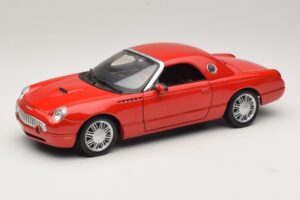
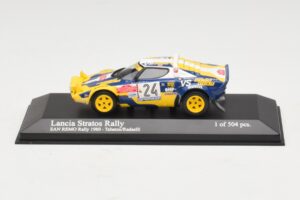
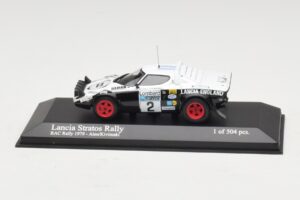
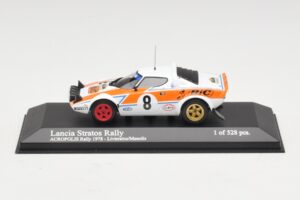
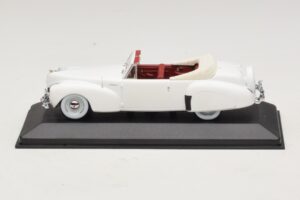
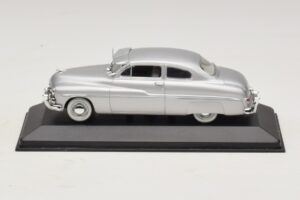
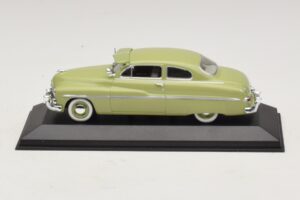
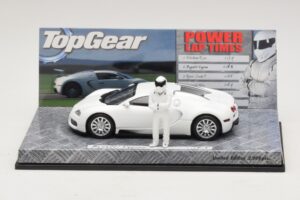
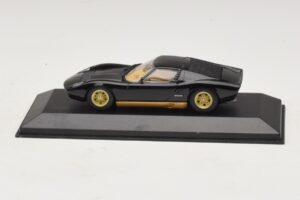
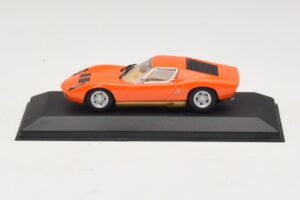
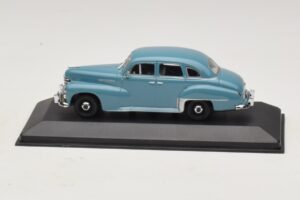
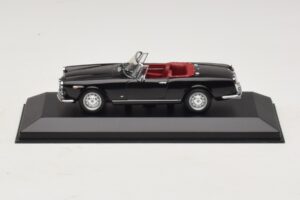
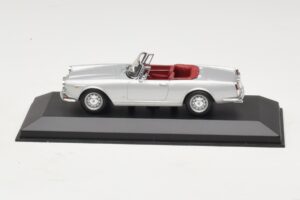
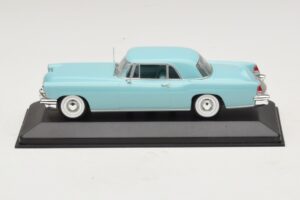
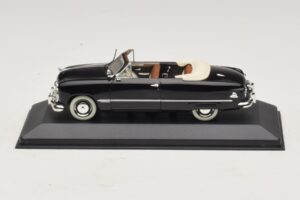
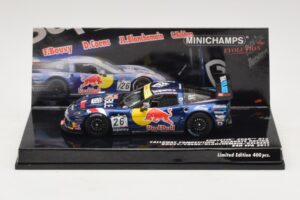
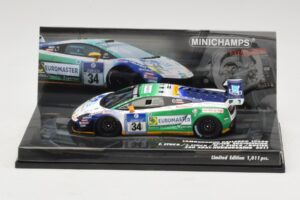
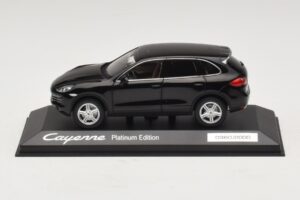
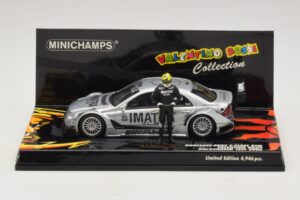
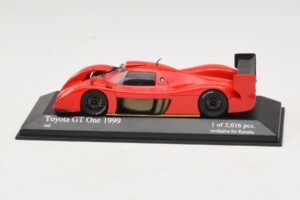
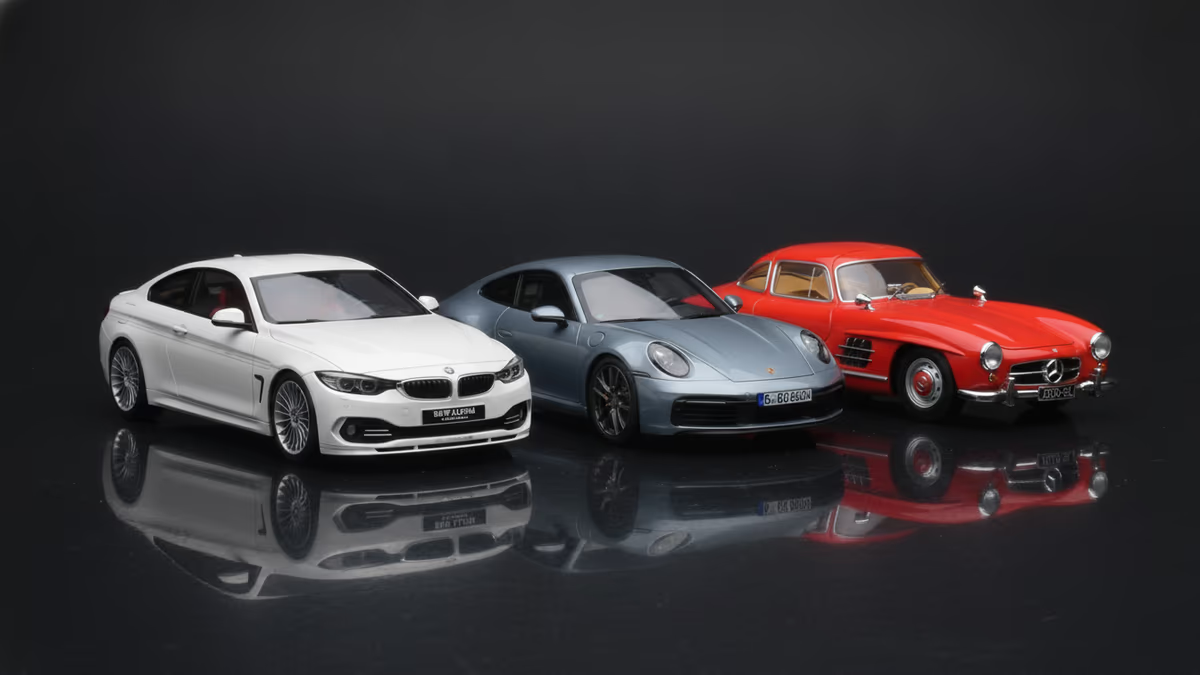
Shop Diecast & Resin Scale Model Cars

More about our models
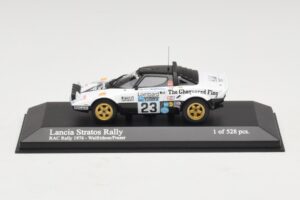
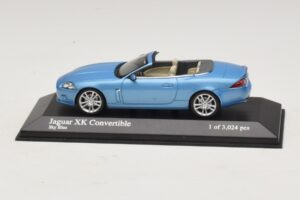
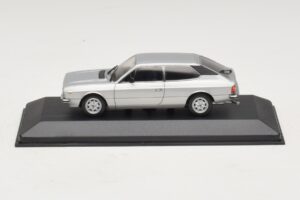
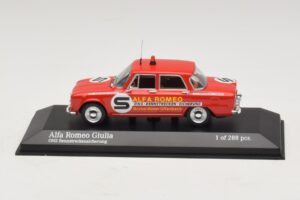
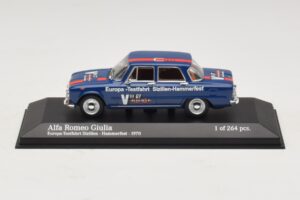
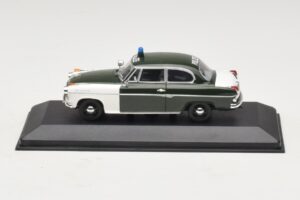
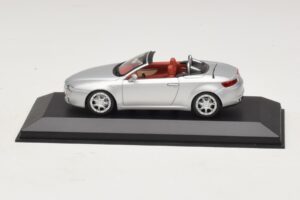
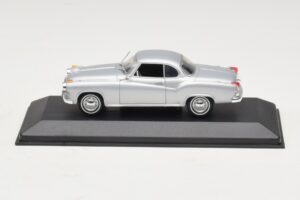
New releases, limited editions and rare discontinued pieces from Norev, Minichamps, GT Spirit, AUTOart and 20+ other manufacturers — in 1:18, 1:43 and 1:12 scale. A perfect gift for any car enthusiast. Every model inspected by hand and photographed in our studio. What you see is what you get.
1,668 models

1668 models available

504 of 1668 models

Scale Model Car Collecting — Your Complete Guide

Scales, materials, manufacturers and limited editions — find the perfect model for your collection.

What scale model cars do you offer?

Diecast and resin scale models in 1:18, 1:43, 1:24, and 1:12 from over 20 manufacturers including Norev, GT Spirit, Minichamps, AUTOart, and OttOmobile. Both brand-new releases and discontinued collector pieces.

Which scale should I choose — 1:18, 1:43 or 1:12?

1:18 is the most popular — great detail, often with opening doors and hoods. 1:43 is compact and affordable, perfect for building a larger collection. 1:12 is museum-grade with extraordinary detail. Most collectors start with 1:18 — it offers the best balance of size, detail and price.

What is the difference between diecast and resin models?

Diecast: metal body, durable, often with opening parts — ideal for handling and beginners. Resin: hand-poured, lighter, finer surface detail, produced in limited runs (typically 500-3,000 pieces). Resin models are best for display and serious collectors.

Which manufacturers do you recommend?

For best value: Norev and Solido. For premium diecast: AUTOart (opening parts) and Minichamps (German precision). For resin limited editions: GT Spirit and OttOmobile. For museum-grade: CMC — hand-assembled with thousands of individual parts.

How do I start collecting model cars?

Start with what you love — a favorite car brand or era. Begin with 1:18 diecast for the best balance of detail and price. Top starter manufacturers: Norev and Solido offer excellent quality at accessible prices.

How do limited editions work?

Limited edition models are produced in a fixed run — typically 500 to 3,000 pieces worldwide. Once sold out, they are never reissued. Resin models from GT Spirit, OttOmobile and BBR are almost always limited. Popular editions can sell out within days of release — pre-ordering is the safest way to secure one.

1:18 Scale — The Collector's Sweet Spot

There is a reason 1:18 dominates diecast collecting. Pick one up and you feel it immediately — the weight of real metal, the click of an opening door, the detail you can actually see without a magnifying glass. At this scale, a Porsche 911 becomes a desktop-sized piece of engineering that holds up to close inspection.

Manufacturers pack everything into 1:18: wired engine bays, textured leather seats, legible gauges, functional steering. It is the scale where the gap between a budget model and a premium one becomes most visible — and most rewarding to explore.

Starting out? Norev and Solido deliver opening parts, accurate proportions and reliable paint at prices that make collecting easy to start. Ready to level up? Minichamps and Almost Real offer finer paint, sharper trim and smaller production runs. Want the best? AUTOart Composite models feature functional suspension, photo-etched grilles and wired engines — measurably above everything else. And at the top, CMC: hand-assembled museum pieces with thousands of individual parts.

One 1:18 model on a shelf makes an impression. Ten make a collection. Browse our 1:18 range to find your next piece.

1:43 and 1:12 — From Palm-Sized to Museum-Grade

1:43 is the traditional European collector standard. Compact enough to fit fifty models in a single cabinet, affordable enough to collect broadly, and backed by the widest catalog in the hobby. Minichamps alone has produced over 30,000 different 1:43 references since 1990. Spark, IXO, and Schuco round out the field with motorsport liveries, rally legends, and everyday classics that never made it to 1:18.

The trade-off: fewer opening parts and smaller details. But for collectors who value variety and breadth over size, 1:43 is unbeatable. It is also the go-to scale for motorsport collectors — F1, Le Mans, WRC, and DTM liveries are produced almost exclusively at 1:43 by Spark, Minichamps, and IXO.

1:12 is the opposite philosophy — fewer models, maximum impact. At this scale, you see details invisible at any other size: brake rotor spokes, tire sidewall markings, individual stitches on the steering wheel. GT Spirit, Kyosho and AUTOart produce the most sought-after 1:12 pieces. Production runs are tiny — often under 500 worldwide — and prices reflect the craftsmanship. One 1:12 model anchors an entire room.

Not sure which scale fits your space? Start with 1:18 for the best balance. Add 1:43 for depth. Save 1:12 for the one car that means everything.

Diecast vs Resin — Two Materials, One Obsession

Most serious collections include both diecast and resin. They look similar on a shelf, but they serve different purposes — and knowing the difference helps you buy smarter.

Diecast is about interaction. Metal body, real weight, opening doors and hoods, engine bays you can inspect. Norev, Solido, Minichamps and AUTOart produce diecast in runs from a few thousand to twenty thousand pieces. The tooling investment is enormous, which is why only proven car models get the diecast treatment — but it also means these models feel substantial in a way resin cannot match.

Resin is about perfection. GT Spirit, OttOmobile and BBR cast models in runs of 100 to 1,500 pieces. The material allows cleaner paint, sharper panel gaps, and shapes that metal molds struggle to reproduce. Resin captures cars that diecast manufacturers skip entirely — the RS6 Avant, the 205 GTI, the Corrado VR6. The trade-off: fragile, no opening parts, handle with care.

Which holds value better? Resin. Smaller runs mean faster appreciation. A sold-out GT Spirit edition regularly trades at two to three times retail within two years. Diecast holds value when the run was small or the model gets discontinued unexpectedly.

Our advice: buy diecast to enjoy, resin to collect. Or do both — most of us do.

Porsche, Mercedes, BMW — The Brands Collectors Want Most

Porsche is the single most collected car brand in scale models worldwide — and it is not close. The 911 alone spans hundreds of variations across seven generations, from the 1973 Carrera RS 2.7 to the latest 992 GT3 RS. Collectors chase specific generations, factory color codes, and limited editions the way watch collectors chase references.

Porsche: The 930 Turbo, 964 RS, and 993 GT2 are the most reproduced subjects. Minichamps has the broadest catalog. AUTOart delivers the most engineering detail. Norev offers the best value. Beyond the 911: the Taycan, Cayman GT4, and classic 356 are gaining serious momentum.

Mercedes-Benz: From vintage 300 SL Gullwings to the AMG GT Black Series. The G63, AMG GT, and S-Class dominate. Mercedes licenses to Norev, Minichamps, and AUTOart — guaranteeing accurate colors and trim.

BMW: The M division drives demand — E30 M3, E46 CSL, G80 M3 Competition. The Z4, M8, and classic 2002 Turbo complete a strong lineup.

Also in high demand: Ferrari (strict licensing = scarce models), Lamborghini (dramatic proportions that suit scale beautifully), Audi (the RS6 Avant is a breakout star), and American muscle — Corvette, Mustang, Camaro.

Norev, Minichamps, GT Spirit, AUTOart — How They Compare

Every manufacturer has a personality. Knowing them saves you money and helps you build a collection with real range.

Norev (France) is where most serious collectors start. Strong licenses — Porsche, Mercedes, Renault, Peugeot. Opening parts, consistent paint, accurate proportions. If you buy one brand to test the hobby, make it Norev.

GT Spirit (France) does resin exclusively at 1:18. Runs of 300-1,500 pieces. Known for bold colors and cars others skip — the Audi RS6, Toyota Supra, AMG GT. No opening parts, but the surface finish is a step above any diecast at any tier.

Minichamps (Germany) is the catalog king — 30,000+ references since 1990. F1, Porsche, DTM, Le Mans. Available in 1:18, 1:43, and 1:12. If you want a specific livery or race car, Minichamps probably made it.

AUTOart (Hong Kong) is the engineering benchmark. Composite body construction, functional suspension, wired engines, photo-etched grilles. Every model feels like it was built by someone who cares as much as you do. The top of 1:18 for collectors who want the best and are willing to invest in it.

OttOmobile (France) has a cult following. Resin models of cars other manufacturers overlook — Renault 5 Turbo, Peugeot 205 GTI, Volkswagen Corrado. Runs of 100-3,000. If you grew up with these cars, OttO is your brand.

IXO (Macau/Portugal) dominates 1:43 — hundreds of rally, Le Mans and commercial vehicle models at accessible prices.

Others worth knowing: Kyosho, Solido, Spark, Almost Real, BBR, CMC.

Our Picks: Best Diecast and Resin Models in 2026

Updated yearly. These are the models we would recommend to a friend — whether they are just starting or already have a hundred pieces on the shelf.

Best first model: Norev 1:18 Porsche 911 (992). Sharp proportions, four opening parts, accurate factory color codes. If one model has to represent 1:18 collecting, this is it.

Best value classic: Solido 1:18 BMW M3 (E30). An icon at an accessible price. Surprisingly good detail for the tier.

Best mid-range: Almost Real 1:18 Land Rover Defender. Exceptional chassis detail, separate components, removable roof. The kind of model that makes you look twice.

Best resin to own: GT Spirit 1:18 Audi RS6 Avant. The model that built GT Spirit's reputation. Limited runs sell out fast and appreciate faster. If you see one in stock, do not wait.

Best engineering: AUTOart 1:18 Porsche 911 GT3 RS Composite. Functional suspension, wired flat-six, photo-etched components. As close to engineering art as 1:18 gets.

Best cult pick: OttOmobile 1:18 Renault 5 Turbo. Consistently appreciates on the secondary market. A car with a story and a following.

For investment: Focus on runs under 1,000 pieces, discontinued manufacturer lines, and limited colorways that match the real car's special editions. Resin from GT Spirit and OttO appreciates fastest.

Scale Model Cars — The Perfect Gift for Car Lovers

Looking for a gift for someone who loves cars? A scale model of their favorite car is one of the most personal, memorable gifts you can give — and it works for birthdays, Christmas, Father's Day, or no occasion at all.

Why it works: A diecast or resin model is not a generic present. It says you know what car they drive, what era they love, or what brand makes their eyes light up. A 1:18 Porsche 911 for a Porsche fan. A classic Mercedes 300 SL for a vintage enthusiast. An Audi RS6 Avant for the dad who quietly dreams about one. The gift becomes a display piece they keep for years.

Best gift picks by budget: For an affordable but impressive first model, start with Norev or Solido at 1:18 — opening parts, real weight, strong presentation in the box. For a premium gift, GT Spirit resin editions come in limited runs and feel genuinely special. For the collector who has everything, a CMC or AUTOart piece is a statement.

Not sure which model to choose? Pick a car brand they love and a scale that fits their space. 1:18 is the safe bet — large enough to impress, detailed enough to reward close inspection. Every model ships in full manufacturer packaging, ready to gift.

Do Scale Models Go Up in Value?

Short answer: the right ones do. Every model car has a finite production life — once the run sells out, the tooling goes on a shelf. No reprints, no second editions. That scarcity is what drives the collector market.

What appreciates: Production runs under 1,000 pieces. Iconic cars — 911 GT3, E30 M3, F40. Limited colorways, especially factory-matched shades like GT Silver Metallic or Signal Green. Models from lines that manufacturers have discontinued. Early AUTOart pieces routinely sell at two to three times their original retail today.

What does not: Mass-produced models in runs of 10,000+. Generic colors — black, silver, white. Anything produced by brands focused on volume over collectibility.

Condition matters enormously. Factory-sealed models in original packaging command significant premiums over displayed pieces. If you are buying with future value in mind: keep the box, keep the foam, keep the wrapping.

Our advice? Collect what you love. If a model appreciates — that is a bonus. If it does not — you still have a beautiful piece on your shelf. That is the difference between collecting and speculating.

Displaying and Protecting Your Collection

A great collection deserves more than a dusty shelf. The right display setup protects your investment and makes every model look its best.

Cases matter. Sealed acrylic or glass blocks dust, UV, and the kind of accidental contact that chips a mirror or snaps an antenna. For 1:18, choose cases wide enough for the full profile with room to spare. For 1:43, stackable cases maximize density without crowding. Glass cabinets with adjustable shelves work well for mixed-scale collections.

Dust is inevitable — even inside closed cases, over months. Clean diecast with a soft natural-bristle brush or a camera lens air blower. Never use water or cleaning solutions — moisture triggers zinc corrosion that shows up as bubbling paint years later.

UV is the silent killer. Direct sunlight fades paint within months. Resin is especially vulnerable — UV degrades the polymer and yellows light finishes permanently. Keep cases away from windows, or use UV-filtering acrylic panels.

Temperature stability matters more than most collectors realize. Avoid locations with temperature swings — metal expands and contracts, cracking paint and loosening glued parts over time. A stable, climate-controlled room is ideal.

Rotate your displayed models every few months. It distributes UV exposure evenly and gives you a regular opportunity to inspect for issues before they become problems.

0